There’s something we see time and time again in real estate and surprisingly, it’s not about stone benchtops, luxury tapware, or whether the carpet is wool or synthetic.
It’s the floorplan and more specifically, how a home actually lives.
Because when buyers walk through a property, particularly families, they are subconsciously assessing something far bigger than finishes. They’re imagining their future routines. The morning chaos. After-school supervision. Birthday parties. One child doing homework at the kitchen bench while another plays outside.
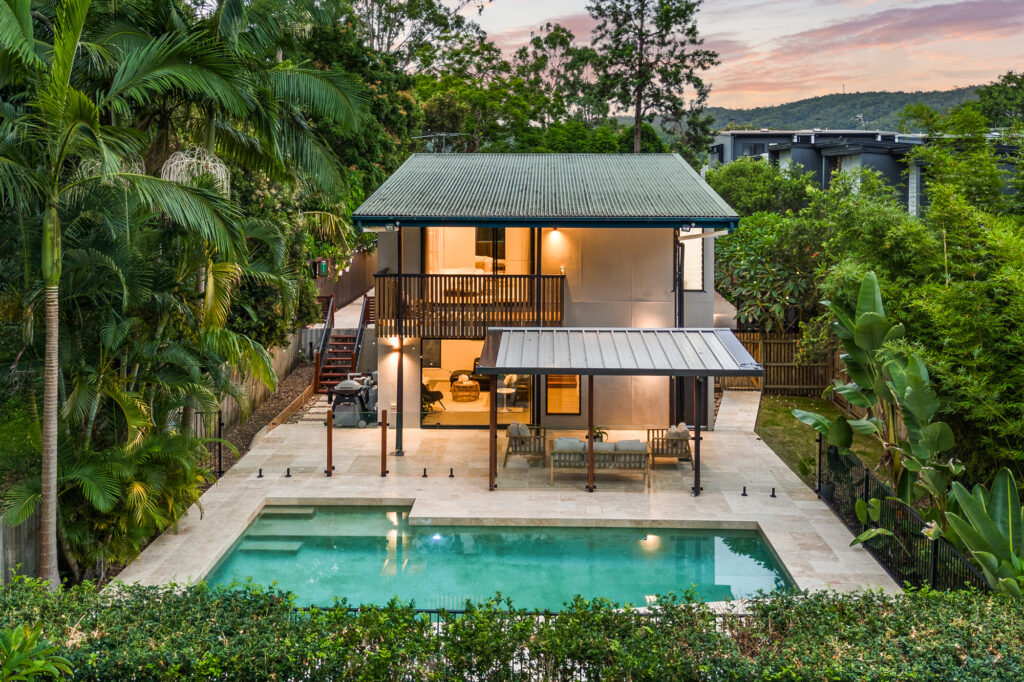
And when it comes to homes with pools, buyers immediately think: How do I supervise the kids in the pool while cooking dinner?
This is everyday life stuff.
If a home interrupts that connection or doesn’t support those behaviours naturally, buyers feel it almost immediately.
You can spend hundreds of thousands of dollars renovating a property, but if the kitchen can’t see the backyard, the pool sits disconnected from the living areas, or the indoor and outdoor areas feel isolated from one another, buyers will often devalue the home against competing properties that simply function better.
That doesn’t make the property impossible to sell. But it can reduce competition, and in turn, influence the market’s perception of value. And let’s not forget, the longer a home sits on the market, the greater the likelihood it eventually sells below the original desired price.
In a market where buyers are constantly comparing homes both emotionally and practically, layout has a direct impact on perceived value, particularly here in Brisbane, where climate and lifestyle heavily influence buyer behaviour.
Families in our market are typically looking for:
- Indoor-outdoor integration
- The ability to supervise children in the yard from the kitchen and living zones
- Spaces that allow them to feel connected while still functioning independently
- Easy entertaining
This can often be described as effortless connection. The homes that consistently achieve premium prices usually understand and offer this well.
Ironically, some of the biggest renovation budgets are spent on the least important elements from a resale perspective. Expensive finishes become the focus, while orientation, flow, functionality and site planning become secondary considerations.
Then comes the difficult conversation:
“Why did Mrs Jones down the road achieve more than us?”
Often, the answer isn’t because her finishes were better. It’s because her home lived better.
Maybe the kitchen connected naturally to the outdoor entertaining area. Maybe the living spaces captured beautiful northern light. Perhaps the backyard felt integrated into everyday living rather than detached from it.
The floorplan simply supported the way modern families want to live.
Good resale design isn’t just visual, it’s behavioural.
The strongest performing homes tend to reduce friction in daily life. They create visibility, connection and ease – and buyers will pay for that, even if they can’t fully articulate why.
This is particularly important for renovators to understand before spending significant money. Not every renovation adds equal value. In fact, some of the most expensive upgrades can deliver surprisingly poor returns if the underlying layout still works against the largest buyer demographic likely to purchase the home.
Before choosing tiles, tapware or feature lighting, step back and ask a bigger question:
“How does this home actually function for the people most likely to buy it in the future?”
That question alone can save homeowners from pouring money into cosmetic improvements while overlooking the very thing that drives emotional buyer competition in the first place.
So where should you go for advice before spending all this money on a renovation?
Sometimes the most valuable renovation advice doesn’t come from a builder, architect, or Pinterest board. It comes from the people standing inside homes every weekend listening to real buyer feedback in real time.
That’s one of the unexpected advantages of speaking to a knowledgeable sale’s advocate before renovating.
Having built and renovated homes myself and lived through many different stages of family life, I understand firsthand how quickly priorities change depending on lifestyle, children, entertaining, functionality and future planning.
Now, working on the other side as an agent, I hear the honest conversations buyers have as they walk through a home. The objections. The little hesitations. The features that create emotional connection and the design choices that quietly push buyers away.
Before you spend tens – or even hundreds – of thousands of dollars renovating, it’s worth having a conversation with someone who understands not just building, renovation and design, but buyer behaviour too.
A simple layout decision can be the difference between a nice renovation and a premium sale price in time to come.
Before you renovate, give me a buzz…